2 පෙරහන

English, Français

අපගේ ප්‍රකාශන වෙනත් භාෂා වලින් විමසා බැලීම සඳහා, "මකන්න" යන්න click කරන්න හෝ වම පැත්තේ ඇති භාෂා ලැයිස්තුව පිරික්සන්න.

මකන්න
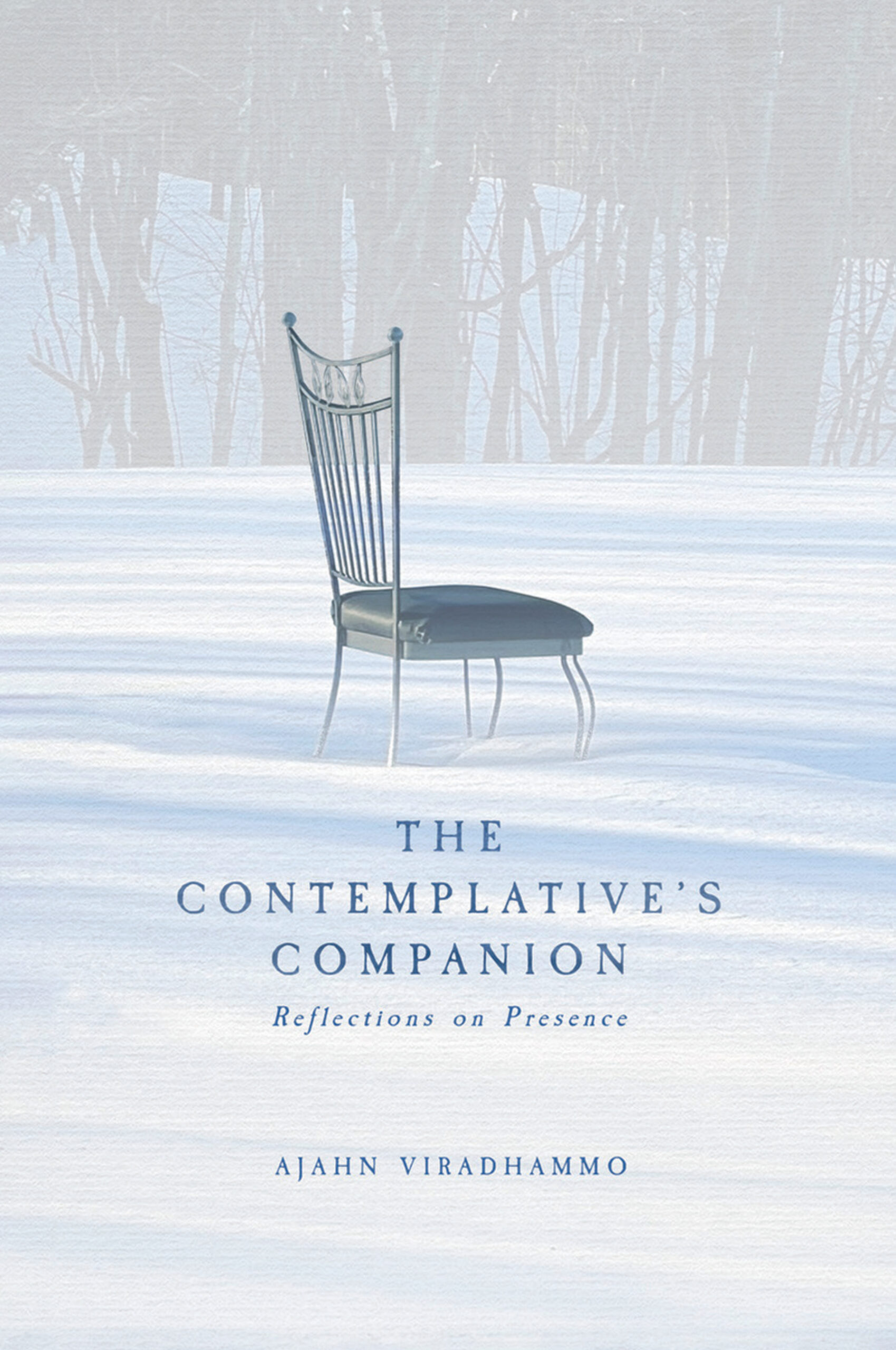
Cover for The Contemplative's Companion
[From the Introduction]: "The Contemplative’s Companion is both a record and a guide of this virtual meditation retreat held during the first wave of the COVID-19 pandemic. At that time, Ajahn Viradhammo and the organisers from the Ottawa Buddhist Society aimed to create a new virtual retreat community with solitary practitioners living everywhere in pandemic isolation. [...] Another thing to keep in mind as you... තව කියවන්න

[From the Introduction]: "The Contemplative’s Companion is both a record and a guide of this virtual meditation retreat held during the first wave of the COVID-19 pandemic. At that time, Ajahn Viradhammo and the organisers from the Ottawa Buddhist Society aimed to create a new virtual retreat community with solitary practitioners living everywhere in pandemic isolation.

[...]

Another thing to keep in mind as you go through this book, or the audio recordings that are available as a playlist on Tisarana Buddhist Monastery's YouTube channel, is that the teachings offered by the Forest Sangha teachers, such as Ajahn Viradhammo, are spoken contemporaneously without notes. In that way, the talks are a response to the needs of the time and listeners. But, as you’ll discover, the themes are universal because the very nature of Dhamma is akāliko (timeless)."

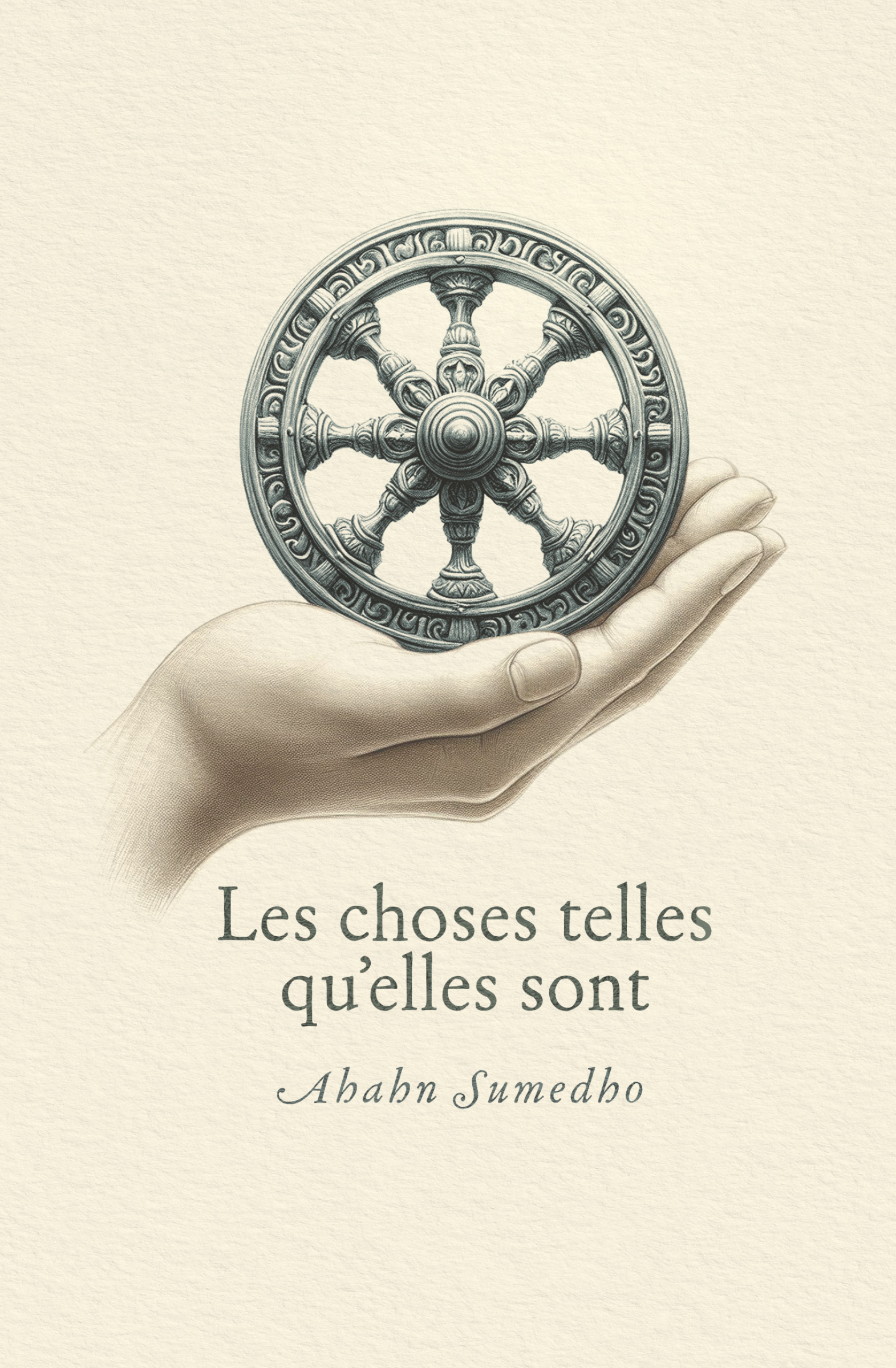
Cover for Les choses telles qu’elles sont
Ajahn Sumedho est un moine de la Tradition de la forêt. Il fut ordonné en Thaïlande, à Nong Khai, en 1967 et s’étant rendu peu après à Wat Pah Pong, il fut le premier disciple occidental d’Ajahn Chah. Après avoir passé une dizaine d’années auprès de son maître, ce dernier lui proposa d’aller en Angleterre à l’invitation de l’English Sangha Trust qui invitait des moines... තව කියවන්න

Ajahn Sumedho est un moine de la Tradition de la forêt. Il fut ordonné en Thaïlande, à Nong Khai, en 1967 et s’étant rendu peu après à Wat Pah Pong, il fut le premier disciple occidental d’Ajahn Chah. Après avoir passé une dizaine d’années auprès de son maître, ce dernier lui proposa d’aller en Angleterre à l’invitation de l’English Sangha Trust qui invitait des moines venus d’Asie pour vivre, pratiquer et enseigner le bouddhisme de la tradition Theravada.

Ses enseignements clairs et directs attirèrent rapidement l’attention d’un grand nombre de personnes venues de toutes parts, et en 1979 fut créé Chithurst, le premier monastère de la Tradition de la forêt en occident.

Ce livre est un des premiers recueils d’enseignements qu’Ajahn Sumedho donna à la communauté de moines et de nonnes ainsi qu’aux résidents laïcs au cours de plusieurs retraites d’hiver entre 1979 et 1989. Il offre au lecteur un vaste éventail des aspects les plus importants du Bouddhisme et, par son approche approfondie de la pratique, il nous transmet une vision limpide du chemin du Dhamma. [...]

මෙම පොත The way it is හි පරිවර්තනයක් වේ
Cover for Mara and the Mangala II
This story is intended to be a partner to the two novels ‘The Pilgrim Kamanita ~ A Legendary Romance’, written by Karl Gjellerup in 1906, and ‘The Killer ~ Mara and the Mangala, Book I’, written by myself, published in 2019. This present book exists as a tale that both stands on its own and serves as a continuation of the stories in the previous... තව කියවන්න

This story is intended to be a partner to the two novels ‘The Pilgrim Kamanita ~ A Legendary Romance’, written by Karl Gjellerup in 1906, and ‘The Killer ~ Mara and the Mangala, Book I’, written by myself, published in 2019.

This present book exists as a tale that both stands on its own and serves as a continuation of the stories in the previous volumes. There is no need to have read the earlier books in order to make sense of this one; however, should the reader wish to go to the source from which many of the characters and scenes of this tale have sprung, the previously published books can be found here and here.

In the tradition of such eminent authors as Charles Dickens, Sir Arthur Conan Doyle and Alexandre Dumas, the present book is being released as a serial novel, one chapter every fortnight, over the years 2025-26. It is planned that, once all the chapters have been released, an edition of the whole story will be published as a single book.

One of the worst things that can happen to a tale to be read for pleasure is to have it surrounded by footnotes and appendices. This is true; but it’s also true that some readers might like to know: ‘Did this come from the Buddha?’ ‘Where can I find the rest of that quote?’ ‘Did that really happen!?’

An appendix of notes and references has therefore been created, which outlines the sources of the derived material that has been used. The main body of the text is not marked in any way to indicate these notes; however, if the reader is curious about a certain passage, they can go to the end of the chapter, look for the page and quotation in question, and see if there’s a comment or reference for it. In this way, if one just wants to read the story and ignore the rest one can easily do so but, if one is interested in finding out more and checking the facts, the origins are mostly outlined there.

Also, gentle reader, please note that the original author (Karl Gjellerup) switched freely between using Sanskrit (the language of the Northern Buddhist and Hindu scriptures) and Pali (the language of the Southern Buddhist scriptures) during the course of his foundational tale. In our efforts to be true to his style this mixture of usage has been maintained in the two subsequent volumes.

Ajahn Amaro
Amaravati Monastery
Spring, 2025
Cover for Happily Ever After. 5 Beyond
Reflections on life goals and priorities. In this volume: - The good, the bad and the unconditioned - ‘We need to talk about Nibbāna’ - Suchness and the square root of minus one - Unshakeable well-being - ... Happily ever after
Cover for Happily Ever After. 4 Money
Reflections on life goals and priorities. In this volume: - Buddhism and the pursuit of wealth - ‘How to live a Dhamma life in the capitalist world of today?’ - A currency of well-being
Cover for Happily Ever After. 2 Emotion
Reflections on life goals and priorities. In this volume: - ‘Heroin or chocolate cake?’ - ‘I am a Buddhist, why am I so angry?’ - The importance of being bored, sad and lonely - ‘If you truly love me, don’t create me in your mind’
Cover for Happily Ever After. 1 Reality
Reflections on life goals and priorities. In this volume: - ‘The Blue Pill or the Red Pill? Why Wake up When my Habits are so Pleasant?’ - ‘Of course it’s happening in your head, Harry, but why on earth should that mean that it is not real?’ - Let the citta draw a picture
Cover for Paccuppanna – Le moment présent
La conscience possède la qualité d’un miroir. On peut y accéder à tout moment, devenir conscient de l'esprit et du corps tels qu'ils sont à cet instant précis. Peut-être que la conscience reflète la sensation d'endormissement ou d’ignorance, la sensation de froid ou de chaud, de lourdeur ou de légèreté. La conscience contemplative peut voir les choses, y compris celles qui nous collent à la... තව කියවන්න

La conscience possède la qualité d’un miroir. On peut y accéder à tout moment, devenir conscient de l'esprit et du corps tels qu'ils sont à cet instant précis. Peut-être que la conscience reflète la sensation d'endormissement ou d’ignorance, la sensation de froid ou de chaud, de lourdeur ou de légèreté. La conscience contemplative peut voir les choses, y compris celles qui nous collent à la peau. Elle reflète les sensations d'aversion, de colère, de gentillesse, les sentiments agréables et désagréables – toutes sortes de choses. Cette qualité qui permet de voir, de connaître cet esprit contemplatif est neutre. Elle- même ne juge ni ne critique ; la conscience reflète simplement que l'esprit est en train de juger et de critiquer. C'est ce dont parle le Bouddha quand il dit que le Dhamma « apparaît ici et maintenant » ; pas demain, pas hier, mais ici et maintenant dans le moment présent. Le Dhamma est en dehors du temps – il n'en dépend pas.

මෙම පොත Paccuppanna – The Present Moment හි පරිවර්තනයක් වේ
Cover for Graines de Dhamma
Les textes rassemblés dans ce livret proviennent d’enseignements variés donnés par Ajahn Sundara au Monastère d’Amaravati. Cette collection inclut des enseignements offerts à la communauté laïque et monastique lors des retraites de méditation ainsi que des articles rédigés par Ajahn Sundara au cours d’une vingtaine d’années. Choisis au hasard, ces extraits abordent des thèmes et des aspects de la pratique bouddhiste que le lecteur pourra... තව කියවන්න

Les textes rassemblés dans ce livret proviennent d’enseignements variés donnés par Ajahn Sundara au Monastère d’Amaravati. Cette collection inclut des enseignements offerts à la communauté laïque et monastique lors des retraites de méditation ainsi que des articles rédigés par Ajahn Sundara au cours d’une vingtaine d’années. Choisis au hasard, ces extraits abordent des thèmes et des aspects de la pratique bouddhiste que le lecteur pourra contempler au travers de ses propres expériences.

මෙම පොත Seeds of Dhamma හි පරිවර්තනයක් වේ
Load more