1 filtre

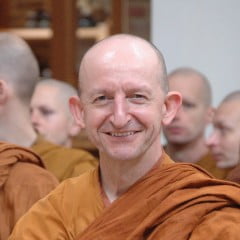
Ajahn Amaro

Netejar

Ajahn Amaro

Born in England in 1956, Ajahn Amaro received his BSc. in Psychology and Physiology from the University of London. Spiritual searching led him to Thailand, where he went to Wat Pah Nanachat,... Llegir més

Born in England in 1956, Ajahn Amaro received his BSc. in Psychology and Physiology from the University of London. Spiritual searching led him to Thailand, where he went to Wat Pah Nanachat, a Forest Tradition monastery established for Western disciples of Thai meditation master Ajahn Chah, who ordained him as a bhikkhu in April 1979. He returned to England in October 1979 and joined Ajahn Sumedho at the newly established Chithurst Monastery in West Sussex.

In 1983 he made an 830-mile trek from Chithurst to a new branch monastery, Harnham Vihāra, near the Scottish border. In July 1985, he moved to Amaravati Buddhist Monastery north of London and resided there for many years. In the early 1990s, he started making trips to California every year, eventually establishing Abhayagiri Monastery near Ukiah, Northern California, in June of 1996.

He lived at Abhayagiri until the summer of 2010, holding the position of co-abbot along with Ajahn Pasanno. At that time, he then moved back to Amaravati Buddhist Monastery in England to take up the position of abbot of this large monastic community.

Cover for ความกลัว พ้นหรือจม ?
ความกลัวและกังวลเป็นความรู้สึกที่อยู่กับมนุษย์มานานแสนนาน แต่ละคนล้วนเจอแล้วจาก จากแล้วเจอ เจอแล้วจาก… จากเรื่องนี้ เป็นเรื่องนั้น แล้วไปเรื่องโน้น และอีกหลายๆ เรื่อง ‘เป็น’ ความรู้สึกที่วนอยู่ในใจ และเวียน ‘อยู่’ กับเรื่องราวต่างๆ มากมาย ‘คือ’ วังวนของความทุกข์ และหลุมดำที่ไม่มีใครอยากจะตกลงไป ไม่ว่าคนชาติไหน ภาษาใด ก็เคยพบกับความกลัวและกังวลทั้งสิ้น
Aquest llibre és una traducció de Fear and Fearlessness
Cover for Mara and the Mangala II
This story is intended to be a partner to the two novels ‘The Pilgrim Kamanita ~ A Legendary Romance’, written by Karl Gjellerup in 1906, and ‘The Killer ~ Mara and the Mangala, Book I’, written by myself, published in 2019. This present book exists as a tale that both stands on its own and serves as a continuation of the stories in the previous... Llegir més

This story is intended to be a partner to the two novels ‘The Pilgrim Kamanita ~ A Legendary Romance’, written by Karl Gjellerup in 1906, and ‘The Killer ~ Mara and the Mangala, Book I’, written by myself, published in 2019.

This present book exists as a tale that both stands on its own and serves as a continuation of the stories in the previous volumes. There is no need to have read the earlier books in order to make sense of this one; however, should the reader wish to go to the source from which many of the characters and scenes of this tale have sprung, the previously published books can be found here and here.

In the tradition of such eminent authors as Charles Dickens, Sir Arthur Conan Doyle and Alexandre Dumas, the present book is being released as a serial novel, one chapter every fortnight, over the years 2025-26. It is planned that, once all the chapters have been released, an edition of the whole story will be published as a single book.

One of the worst things that can happen to a tale to be read for pleasure is to have it surrounded by footnotes and appendices. This is true; but it’s also true that some readers might like to know: ‘Did this come from the Buddha?’ ‘Where can I find the rest of that quote?’ ‘Did that really happen!?’

An appendix of notes and references has therefore been created, which outlines the sources of the derived material that has been used. The main body of the text is not marked in any way to indicate these notes; however, if the reader is curious about a certain passage, they can go to the end of the chapter, look for the page and quotation in question, and see if there’s a comment or reference for it. In this way, if one just wants to read the story and ignore the rest one can easily do so but, if one is interested in finding out more and checking the facts, the origins are mostly outlined there.

Also, gentle reader, please note that the original author (Karl Gjellerup) switched freely between using Sanskrit (the language of the Northern Buddhist and Hindu scriptures) and Pali (the language of the Southern Buddhist scriptures) during the course of his foundational tale. In our efforts to be true to his style this mixture of usage has been maintained in the two subsequent volumes.

Ajahn Amaro
Amaravati Monastery
Spring, 2025
Cover for Happily Ever After. 5 Beyond
Reflections on life goals and priorities. In this volume: - The good, the bad and the unconditioned - ‘We need to talk about Nibbāna’ - Suchness and the square root of minus one - Unshakeable well-being - ... Happily ever after
Cover for Happily Ever After. 4 Money
Reflections on life goals and priorities. In this volume: - Buddhism and the pursuit of wealth - ‘How to live a Dhamma life in the capitalist world of today?’ - A currency of well-being
Cover for Happily Ever After. 2 Emotion
Reflections on life goals and priorities. In this volume: - ‘Heroin or chocolate cake?’ - ‘I am a Buddhist, why am I so angry?’ - The importance of being bored, sad and lonely - ‘If you truly love me, don’t create me in your mind’
Cover for Happily Ever After. 1 Reality
Reflections on life goals and priorities. In this volume: - ‘The Blue Pill or the Red Pill? Why Wake up When my Habits are so Pleasant?’ - ‘Of course it’s happening in your head, Harry, but why on earth should that mean that it is not real?’ - Let the citta draw a picture
Cover for Hinein-Hören
Es gibt eine Anzahl von Themen die Menschen, welche buddhistische Meditation praktizieren, sehr geläufig sind: „Atemachtsamkeit“, bei der man sich auf den Rhythmus des Atems fokussiert; „Gehmeditation“, die sich um das Spüren der Schritte dreht, während man einen Pfad auf- und abgeht; das innerliche Wiederholen eines Mantras, wie etwa „Bud-dho“ – diese sind alle dazu bestimmt zu helfen, die Aufmerksamkeit in der Gegenwart genau diesen... Llegir més

Es gibt eine Anzahl von Themen die Menschen, welche buddhistische Meditation praktizieren, sehr geläufig sind: „Atemachtsamkeit“, bei der man sich auf den Rhythmus des Atems fokussiert; „Gehmeditation“, die sich um das Spüren der Schritte dreht, während man einen Pfad auf- und abgeht; das innerliche Wiederholen eines Mantras, wie etwa „Bud-dho“ – diese sind alle dazu bestimmt zu helfen, die Aufmerksamkeit in der Gegenwart genau diesen Moments, dieser gegenwärtigen Realität zu verankern.

Neben diesen bekannteren Methoden gibt es viele andere, welche in ähnlicher Funktion dienlich sein können. Eine von diesen ist bekannt als „Hinein-Hören“ oder „Meditation über den inneren Ton“ oder in Sanskrit „Nada-Yoga“. Diese Begriffe beziehen sich alle auf das Hören von dem, was „der Klang der Stille“ oder „der Nada-Ton“ genannt wird. „Nada“ ist das Sanskritwort für „Klang“, ebenso wie das spanische Wort für „nichts“ – ein interessanter und bedeutungsvoller Zufall.

Aquest llibre és una traducció de Inner Listening
Cover for Raízes e Correntes
Este livro contém uma miscelânea de meus escritos, em vez de palestras transcritas, abrangendo minha vida como um ajahn na sangha ocidental da Tradição da Floresta da Tailândia. A primeira parte, “Raízes”, é principalmente histórica; seus capítulos apresentam Ajahn Chah, nosso fundador e nossa inspiração, e Ajahn Sumedho, que nos levou ao Reino Unido e além, e em seguida descreve vários eventos de nossa história... Llegir més

Este livro contém uma miscelânea de meus escritos, em vez de palestras transcritas, abrangendo minha vida como um ajahn na sangha ocidental da Tradição da Floresta da Tailândia. A primeira parte, “Raízes”, é principalmente histórica; seus capítulos apresentam Ajahn Chah, nosso fundador e nossa inspiração, e Ajahn Sumedho, que nos levou ao Reino Unido e além, e em seguida descreve vários eventos de nossa história no Ocidente. A segunda parte, “Correntes”, contém tanto ensinamentos quanto reminiscências pessoais, relatos de algumas de minhas viagens recentes. Evidentemente, em ambas as partes do livro, os ensinamentos se mesclam à história, e a história aos ensinamentos.

Muitos dos capítulos foram originalmente escritos até vinte anos atrás e, portanto, estão inevitavelmente desatualizados. Fiz algumas adaptações com o intuito de torná-los atemporais ou mais atuais, mas por vezes me pareceu melhor deixá-los em seu estado mais ou menos original. Qualquer relato histórico de um movimento como a nossa sangha está sujeito a se tornar desatualizado antes mesmo de ser publicado. Assim, listas de mosteiros e números de monásticos podem não ser mais relevantes; o que realmente importa é que nossa sangha continua a crescer e a florescer para o benefício de humanos e de todos os seres.

Aquest llibre és una traducció de Roots and Currents
Cover for La Revelación
ES UN HECHO NATURAL que el futuro es intrínsecamente incierto. No sabemos qué va a pasar en nuestra práctica. Puede que surjan grandes desafíos y dificultades extremas – quizá algún tipo de enfermedad o lesión, un obstáculo o reto al que nunca habías tenido que enfrentarte. Todo esto puede hacer emerger la sensación de que la situación te supera. O bien puede ocurrir que tu... Llegir més

ES UN HECHO NATURAL que el futuro es intrínsecamente incierto. No sabemos qué va a pasar en nuestra práctica. Puede que surjan grandes desafíos y dificultades extremas – quizá algún tipo de enfermedad o lesión, un obstáculo o reto al que nunca habías tenido que enfrentarte. Todo esto puede hacer emerger la sensación de que la situación te supera. O bien puede ocurrir que tu práctica se despliegue suavemente. Puede que te lo pases genial teniendo profundas y gozosas comprensiones. Pero no importa lo que pase, las proyecciones y anticipaciones que la mente produce no es lo importante – lo importante es saber justo ahora, aquí, en este momento, que “Esto es una anticipación. Esto es una expectativa. Esto es la mente que trata de rellenar el hueco que deja lo desconocido al aplicarle una imagen que le es familiar”. La mente se llena de esperanza, miedo, creencia o proyección – y esa proyección está sucediendo aquí y ahora. Es algo que ahora podemos saber directa, plena y completamente sin ningún tipo de encubrimiento. Podemos prestar atención al hecho de que la mente está creando expectativas, anhelos o miedos. Al llevar la atención a lo que se está presentando, a lo que realmente está surgiendo ahora, justo en ese instante estamos consiguiendo el principal propósito (y también el principal método) de la meditación.

Aquest llibre és una traducció de The Breakthrough
Cover for Auf den Geist kommt’s an
Der Titel dieses Buchs, Auf den Geist kommt’s an, lenkt die Aufmerksamkeit zur geistigen Einstellung. Er weist darauf hin, wie enorm wichtig unsere Haltung ist, wenn der Geist Erfahrungen aufnimmt und verarbeitet, und er deutet auf jenen Aspekt der Dhamma-Praxis, alles zu unserem Lehrer zu machen. An unserem offenen Retreat 2017 im Amaravati-Kloster nahmen über 400 Menschen teil. Ajahn Sumedho hielt jeden Abend einen Vortrag... Llegir més

Der Titel dieses Buchs, Auf den Geist kommt’s an, lenkt die Aufmerksamkeit zur geistigen Einstellung. Er weist darauf hin, wie enorm wichtig unsere Haltung ist, wenn der Geist Erfahrungen aufnimmt und verarbeitet, und er deutet auf jenen Aspekt der Dhamma-Praxis, alles zu unserem Lehrer zu machen. An unserem offenen Retreat 2017 im Amaravati-Kloster nahmen über 400 Menschen teil. Ajahn Sumedho hielt jeden Abend einen Vortrag und andere Gast-Ajahns boten täglich Anleitungen an und führten Frage-und-Antwort Sitzungen durch. Für einige von uns war dies eine sehr inspirierende Zeit. Es gab eine Vielzahl erhellender und einfallsreicher Vorträge; für mich war es wahrhaft eine ermutigende und schöne Veranstaltung. Aber was, wenn die Einstellung anderer unterschiedlich dazu war? Selbst wenn sie inspirierende Vorträge hörten, könnten sie angefangen haben zu denken, dass es zu wenige waren. Oder sie könnten die Lehrer miteinander verglichen haben, um zu beurteilen, wer besser war. Sogar so etwas Edles, Schönes und Heilsames, wie das Hören eines Dhamma-Vortrags, hätte zu einem Grund für Leiden, Enttäuschung oder Unzufriedenheit werden können, wenn die Person das Erlebnis in einer ungeschickten Art aufgefasst hätte. Unser Geist kann sich leicht in Urteilen verfangen: „Dies“ ist nicht so gut wie „das“ oder „jetzt“ ist nicht ganz so real oder gut wie „diese Aussicht dann in der Zukunft“ oder „jene tolle Zeit damals in der Vergangenheit“. Wenn unser Geist dies tut, können wir es betrachten. Dieses Gefühl der Enttäuschung, dieser vergleichende Geist, kann in diesem Moment zu unserem Lehrer werden. Wenn wir weise sind, wird alles uns belehren: das Wetter, unsere Erinnerungen, unsere physische Verfassung, die Umgebung und die Menschen um uns herum.

Aquest llibre és una traducció de Mind Is What Matters: the Phenomenological Approach of the Buddha
Load more