3 ตัวกรอง

Ajahn Amaro

Deutsch, English

หากต้องการสำรวจสิ่งพิมพ์ของเราในภาษาอื่น ๆ โปรดคลิก "ล้าง" หรือเลือกดูรายการภาษาจากเมนูทางซ้าย

ล้าง

Ajahn Amaro

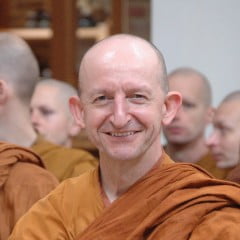
Born in England in 1956, Ajahn Amaro received his BSc. in Psychology and Physiology from the University of London. Spiritual searching led him to Thailand, where he went to Wat Pah Nanachat,... อ่านเพิ่มเติม

Born in England in 1956, Ajahn Amaro received his BSc. in Psychology and Physiology from the University of London. Spiritual searching led him to Thailand, where he went to Wat Pah Nanachat, a Forest Tradition monastery established for Western disciples of Thai meditation master Ajahn Chah, who ordained him as a bhikkhu in April 1979. He returned to England in October 1979 and joined Ajahn Sumedho at the newly established Chithurst Monastery in West Sussex.

In 1983 he made an 830-mile trek from Chithurst to a new branch monastery, Harnham Vihāra, near the Scottish border. In July 1985, he moved to Amaravati Buddhist Monastery north of London and resided there for many years. In the early 1990s, he started making trips to California every year, eventually establishing Abhayagiri Monastery near Ukiah, Northern California, in June of 1996.

He lived at Abhayagiri until the summer of 2010, holding the position of co-abbot along with Ajahn Pasanno. At that time, he then moved back to Amaravati Buddhist Monastery in England to take up the position of abbot of this large monastic community.

Cover for Mind Is What Matters: the Phenomenological Approach of the Buddha
THE TITLE OF THIS BOOK, Mind Is What Matters, brings attention to attitude. It points to the enormous difference our attitude makes as the mind receives and processes experience, and it points to that aspect of Dhamma practice of making everything our teacher. In 2017 at our open retreat at Amaravati Monastery, there were over 400 people attending. Ajahn Sumedho gave teachings every evening, and... อ่านเพิ่มเติม

THE TITLE OF THIS BOOK, Mind Is What Matters, brings attention to attitude. It points to the enormous difference our attitude makes as the mind receives and processes experience, and it points to that aspect of Dhamma practice of making everything our teacher. In 2017 at our open retreat at Amaravati Monastery, there were over 400 people attending. Ajahn Sumedho gave teachings every evening, and other visiting ajahns offered instruction and led question-and-answer sessions daily. For some of us, it was a very inspiring time. There were a lot of illuminating and imaginative teachings; for me it was a truly encouraging and beautiful event. But what if someone else’s attitude had been different? Even though they were hearing inspiring teachings, they could have begun to think they were not enough. Or they could have compared one teacher to another, judging who was better. Even something as noble, beautiful, and wholesome as hearing Dhamma teachings could have become a cause of suffering, disappointment or discontent if the person had taken hold of the experience in an unskilful way. Our minds can easily get caught in judgment: ‘this’ is not as good as ‘that’, or ‘now’ is not quite as real or good as ‘that prospect off in the future’ or ‘that great time back in the past’. If this is what our mind is doing, we can look at it. This feeling of disappointment, this comparing mind, can become our teacher in this moment. If we are wise, everything will teach us: the weather, our memories, our physical condition, the environment, the people around us.

In addition to the Thai version, a mixed English/Thai one is also available.

มีให้บริการใน Deutsch, ไทย ด้วย
Cover for Forgiving and Compassion

Forgiving and Compassion

Ajahn Amaro (2021)
Sunday Talk on the 18th September 2016 Good afternoon to you all. The theme for the Sunday talk this week is ‘Forgiving and Compassion’ so I will offer some reflections around these significant areas of our lives. I will start with forgiving. This is a very important aspect of spiritual training and, as a way of life, it is a counterpoint to the attitude of... อ่านเพิ่มเติม

Sunday Talk on the 18th September 2016

Good afternoon to you all. The theme for the Sunday talk this week is ‘Forgiving and Compassion’ so I will offer some reflections around these significant areas of our lives. I will start with forgiving.

This is a very important aspect of spiritual training and, as a way of life, it is a counterpoint to the attitude of being unforgiving, the attitude of wanting revenge, carrying grudges around. It’s about working with those attitudes of mind where we are determined to hang onto our negativity and our hurts, and to wear those proudly upon our sleeves – all the wrongs that have been done to me, the things that were unforgivable – that we are habitually conditioned to carry around and make much of. Sometimes people find themselves building their entire lives around wanting revenge, or resenting something that’s happened to them in their life, there’s something in the heart that can’t forgive.

When I speak in this way, in case any of you are wondering, I’m not reading anybody’s mind. Oftentimes when one starts talking about these themes people think, ‘How did he know!’ Please be reassured that it’s just averages, the law of statistics and how life is for many of us. I cannot read people’s minds.

มีให้บริการใน ไทย ด้วย
Cover for Less is More

Less is More

Ajahn Amaro (2020)
The theme for this afternoon’s talk is ‘Less is More – Frugality, Renunciation and Generosity’. I will focus on the frugality and renunciation aspects first of all and then get to generosity later on. First of all, it struck me how, if we say that our usual philosophy in life is ‘more is better’, if ‘less is more’, then ‘less is better’ – if you... อ่านเพิ่มเติม

The theme for this afternoon’s talk is ‘Less is More – Frugality, Renunciation and Generosity’. I will focus on the frugality and renunciation aspects first of all and then get to generosity later on.

First of all, it struck me how, if we say that our usual philosophy in life is ‘more is better’, if ‘less is more’, then ‘less is better’ – if you follow the logic – which is a good way of summarizing this theme.

This is an important topic for our times. Probably the kind of people who gather together at a Buddhist monastery on a Sunday afternoon are not those overly committed to consumption (what we call the ‘consumer society’ as if we were just a mouth with legs on) but that doesn’t have to be the way we see ourselves, even though this is often the way that society and our value systems are conditioned to operate. In the very wonderful little book called Buddhist Economics by Venerable Payutto, a Thai philosopher monk, he succinctly describes classic economics as: ‘Maximum consumption leads to maximum happiness.’ It’s the basic ethic of the consumer society. The more you consume then the happier you are. Even though we might say, ‘I’m a Buddhist, I’m not like that!’ I think it’s helpful to reflect that, if we look around and we see our working life, our family life, the society we live in, a huge amount of our conditioning is like that. The more that you’ve got, the happier you should be, so there’s an enormous amount of drive to get more. Maybe it’s not physical possessions but at least more status or more Facebook followers or more Instagram followers, more likes, as well as the usual more property, more money and more approval and so forth. So that ‘more is better’ as an ethic for our society is very strong I would suggest; even if we’re not overtly materialistic, or we don’t see ourselves that way, that can still be a very powerful driving force. That said, this is also not solely a modern thing – the search for happiness through material possessions, through the sensory world – this has been part of our life in the human realm since distant ages past.

มีให้บริการใน ไทย ด้วย
Cover for The Lesser, The Greater, The Diamond and the Way
HISTORICALLY THERE HAVE BEEN differences of opinion about the relative merits of Theravada and Mahayana Buddhism and, if you read much of the literature, they would seem to be quite divergent in their approaches toward Buddhist practice – yet there also seem to be some tremendous affinities. When I arrived at the International Forest Monastery in Thailand, I had never read any Buddhist books and... อ่านเพิ่มเติม

HISTORICALLY THERE HAVE BEEN differences of opinion about the relative merits of Theravada and Mahayana Buddhism and, if you read much of the literature, they would seem to be quite divergent in their approaches toward Buddhist practice – yet there also seem to be some tremendous affinities.

When I arrived at the International Forest Monastery in Thailand, I had never read any Buddhist books and I wasn’t actually in search of becoming a Buddhist monk. I was a wanderer, a free-lance spiritual seeker, and I just happened to turn up at this forest monastery that Ajahn Sumedho had established a couple of years before, basically as a place for a free meal and a roof over my head for a few nights. Little did I expect, some twelve or thirteen years later, that I would be doing what I am doing now. But when I went there and asked the monks about Buddhism, to explain things a little bit for me so that I could get a feel for what their life was about, the first thing one of them did was to give me a copy of a book of talks by a Zen Master, and he said, ‘Don’t bother trying to read the Theravada literature; it’s terribly boring, very dry. Read this, it is pretty much the same thing that we’re doing, and it will give you a sense of what our practice is about.’ And I thought, ‘Well, obviously these guys are not too hung up on their tradition.’ The book was Zen Mind, Beginner’s Mind.

So, one could see right from the beginning that, even though there is a strength to the particular form within any Buddhist country, one is not necessarily constricted or limited by that. I was there for months before I even heard of ‘Theravada’ and ‘Mahayana,’ let alone the differences of opinion between them. It seemed that when you actually lived the life there really wasn’t any great disparity, but if you thought about it a lot, and if you were the kind of person who wrote histories and books and had got into the political side of religious life, then that was where the divergences occurred.

I have heard Ajahn Sumedho recount a few times over the years that, for the first year of his monastic life, he had been practising using the instructions from a Ch’an meditation retreat given by the Ven. Master Hsü Yün, and that he had used the Dharma talks from that retreat given in China as his basic meditation instruction. When he went to Wat Pah Pong, Ajahn Chah asked him what kind of meditation he had been doing, at first he thought, ‘Oh no, he’s going to get me to give this up and do his method.’ But, when Ajahn Sumedho described what he had been doing and mentioned that it had had excellent results, Ajahn Chah said, ‘Oh, very good, just carry on doing that.’

So, one sees that there is a very strong unity of purpose; even though there might be historical differences between the two traditions, they are very much in accordance with each other. And one begins to see what the different Buddhist traditions are talking about. They get sectioned out into Hinayana or Mahayana or Vajrayana, as different types of Buddhist practice, but they are basically just different labels which are talking about attitudes of mind and, when the traditions are used wisely, then they will address all aspects of our mind, from the most selfish and mundane to the most exalted. They address all the different levels of our life, and it’s only when they are not understood, when people take them as fixed positions, that there is any conflict amongst them.
มีให้บริการใน 中文(简体) ด้วย
Cover for Not Sure!
Cover for Not Sure!

Not Sure!

Ajahn Amaro (2019)
The Dhamma talk was given on the 20th of June 2018 at the World Fellowship of Buddhists The topic for this evening is ‘Not Sure!’ Sitting on Sukhumvit Road and not moving in a vehicle, with the evening scheduled to begin at 6:30 and realizing it had already passed that time, I thought: ‘That’s a very good introduction for this evening – Not Sure! –... อ่านเพิ่มเติม

The Dhamma talk was given on the 20th of June 2018 at the World Fellowship of Buddhists

The topic for this evening is ‘Not Sure!’ Sitting on Sukhumvit Road and not moving in a vehicle, with the evening scheduled to begin at 6:30 and realizing it had already passed that time, I thought: ‘That’s a very good introduction for this evening – Not Sure! – When’s Ajahn Amaro going to arrive? Is he going to arrive? What will happen? It’s uncertain (My Naer). We don’t know. It’s not a sure thing.’ So that was an unplanned but useful preparation for this evening because this is the principle we are investigating here. It’s a part of all of our lives. So, I will offer a few reflections this evening on this theme and hopefully some of the things that I say would be useful for you.

When we meet with a feeling of uncertainty usually what we do is we feel worried, we feel threatened. We don’t know what’s going to happen in the future so what we tend to do is to try to fill up that unknown with a plan or a hope or a belief. We fill it with ideas of what might happen.

We often distract ourselves: ‘I don’t want to think about the future. I don’t want to worry about that. So, I’ll just look at my phone and catch up on my Facebook friends or see what communication I have coming through Line, what’s on the news or something.’ We thus deal with that feeling of worry or uncertainty with choosing distraction or, alternatively, we just switch off – we go blank, go numb and shut the world down, disengage all together. We do this because the feeling of not being sure is something that most of us don’t like and we relate to it as a problem, that feeling of anxiety, uncertainty. We automatically think of it as a problem, something that’s unwelcome.

มีให้บริการใน ไทย ด้วย
Cover for Emptiness and Pure Awareness

Emptiness and Pure Awareness

Ajahn Amaro (2019)
From a talk given on the winter retreat, Chithurst, February 1991 Gotama Buddha said, when he was an old man, “This body is like an old cart, held together by straps; this body only keeps going by makeshift repairs. The only way I can feel comfortable is to absorb my mind into signless concentration.” For all of us, the Buddha included, we are faced with... อ่านเพิ่มเติม

From a talk given on the winter retreat, Chithurst, February 1991

Gotama Buddha said, when he was an old man, “This body is like an old cart, held together by straps; this body only keeps going by makeshift repairs. The only way I can feel comfortable is to absorb my mind into signless concentration.”

For all of us, the Buddha included, we are faced with the inevitable presence of dissatisfaction and physical discomfort. Ever present is the danger of pain and disease, because we are born. Because there is a physical birth, there must be physical decay, the two have to go together, they are one thing. Thus our only true refuge is the Deathless, that which is not subject to disease, not subject to defilement, not subject to time or to limitation, that which is unsupported. In this way, returning to our source, the Deathless, is our only way to cure disease, the only way to pass beyond it.

This returning to the Source, or realizing the Deathless, is the sense of coming to know the source of our life, the origin of our life. Because it is the very fabric of our life, the basis of our existence, it is something that has been exerting a power of attraction on us all through our life, the attraction of Truth, of the Real, the completely satisfying, the completely safe.

มีให้บริการใน ไทย ด้วย
Cover for Mara and the Mangala I
This story is intended to be both a partner to the novel The Pilgrim Kamanita, written by Karl Gjellerup in 1906, and a tale that stands on its own. There is no need to have read the earlier book in order to make sense of this one; however, should you wish to go to the source from which many of the characters and scenes of... อ่านเพิ่มเติม

This story is intended to be both a partner to the novel The Pilgrim Kamanita, written by Karl Gjellerup in 1906, and a tale that stands on its own. There is no need to have read the earlier book in order to make sense of this one; however, should you wish to go to the source from which many of the characters and scenes of this tale have sprung, an English version of it is to be found here.

Cover for A Generous Heart

A Generous Heart

Ajahn Amaro (2018)
Today is the 100th day after the passing away of the king of Thailand: His Majesty King Bhumibol Adulyadej. Also, at this time, a good friend of the sangha, Yom Ploen Petchkua, is very close to the end of her life. She was diagnosed with five brain tumours a few months ago and I had the chance to go down and see her with Ajahn... อ่านเพิ่มเติม

Today is the 100th day after the passing away of the king of Thailand: His Majesty King Bhumibol Adulyadej. Also, at this time, a good friend of the sangha, Yom Ploen Petchkua, is very close to the end of her life. She was diagnosed with five brain tumours a few months ago and I had the chance to go down and see her with Ajahn Pasanno, and a number of monastic and lay friends in December, in her hometown in Songkla, southern Thailand.

Reflecting on these people – the king of Thailand and Yom Ploen – it is said in our Buddhist way of regarding things that these are people who have created a lot of merit, a lot of puñña in their lives. The king of Thailand dedicated himself, for the 70 years that he was on the throne, through living in a skilful way and endeavouring to establish wholesome principles of conduct in the hearts of the Thai people, to help them in genuine, practical and efficient ways: developing water systems, gardening systems, systems of communication and so forth. Yom Ploen has been very involved in supporting our monasteries and helping to publish many Dhamma books. In the last few days I have been conscious of giving away books that she was directly involved in producing books about the funeral of Luang Por Chah and the foundation of Amaravati. Over the years she has been responsible for bringing into being dozens of different Dhamma books.

มีให้บริการใน ไทย ด้วย
Cover for Den fehlenden Frieden finden

Den fehlenden Frieden finden

Ajahn Amaro (2018)
Dieses kleine Buch, das in einer Reihe von Lektionen Meditationshilfen und -techniken für Anfänger beschreibt, basiert auf einer sechswöchigen Serie von Lektionen, die 2002 in Mendocino in Kalifornien gegeben wurden. Diese Lektionen beschreiben buddhistische Meditationstechniken. Die Ideen und Prinzipien für die Meditationspraxis, die in ihnen erklärt werden, stammen eindeutig aus der buddhistischen Welt. Doch bedeutet das nicht, dass diese Meditationsanleitungen ausschließlich für Buddhisten hilfreich oder... อ่านเพิ่มเติม

Dieses kleine Buch, das in einer Reihe von Lektionen Meditationshilfen und -techniken für Anfänger beschreibt, basiert auf einer sechswöchigen Serie von Lektionen, die 2002 in Mendocino in Kalifornien gegeben wurden.

Diese Lektionen beschreiben buddhistische Meditationstechniken. Die Ideen und Prinzipien für die Meditationspraxis, die in ihnen erklärt werden, stammen eindeutig aus der buddhistischen Welt. Doch bedeutet das nicht, dass diese Meditationsanleitungen ausschließlich für Buddhisten hilfreich oder angemessen wären. Die Lektionen stellen einfache Mittel und Techniken zur Verfügung, die man benutzen kann, um das Leben friedlicher zu machen, um zu helfen, sich selbst und andere ein bisschen besser zu verstehen und in etwas mehr Harmonie mit der Welt zu leben.

Die Absicht für dieses Buch und jede dieser Lektionen ist, Methoden, Techniken und Prinzipien zur Verfügung zu stellen, die jedermann und jede Frau im Bereich seines oder ihres eigenen Lebens anwenden kann — unabhängig davon, ob man Humanist, Christ, Kommunist, Buddhist oder Anhänger irgend eines anderen Glaubenssystems ist.

หนังสือเล่มนี้แปลจาก Finding The Missing Peace
Cover for The Hush At The End Of The World

The Hush At The End Of The World

Ajahn Amaro (2017)
In May of 2003, three senior Buddhist monks from the Thai forest tradition of Ajahn Chah – Ajahn Sumedho, Ajahn Amaro and Ajahn Nyanarato – travelled into the Arctic wilderness, 800 miles from the North Pole. This is a photo-journal of their odyssey.
Cover for Roots and Currents

Roots and Currents

Ajahn Amaro (2017)
This book contains a miscellany of my writings, rather than transcribed talks, from throughout my life as an ajahn in the Western Thai Forest sangha. The first part, ‘Roots’, is mainly historical; its chapters introduce Ajahn Chah, our founder and inspiration, and Ajahn Sumedho who led us to the UK and beyond, and then describes various events in our Western history.
มีให้บริการใน Português ด้วย
Cover for The Breakthrough

The Breakthrough

Ajahn Amaro (2017)
This book is based upon the talks and meditation instructions offered during a thirteen-day retreat at Amaravati, in the summer of 2012. It is intended to be something of a follow up to Finding the Missing Peace, which was published in 2011 and presented as ‘a primer of Buddhist meditation’. The Breakthrough is intended to be a somewhat more specialized toolkit, describing the path of... อ่านเพิ่มเติม

This book is based upon the talks and meditation instructions offered during a thirteen-day retreat at Amaravati, in the summer of 2012. It is intended to be something of a follow up to Finding the Missing Peace, which was published in 2011 and presented as ‘a primer of Buddhist meditation’. The Breakthrough is intended to be a somewhat more specialized toolkit, describing the path of Buddhist meditation in an in-depth way, specifically highlighting the role of wisdom and reflective investigation in the development of insight and thereby psychological freedom. The title The Breakthrough comes from the Pali word ‘abhisamaya’. The word, as used by the Buddha, is synonymous with the first level of liberation, known as ‘stream-entry’ – the ‘stream’ in question being the Eightfold Path, which leads to full emancipation, enlightenment. As is described in these pages, this breakthrough is considered to be a spiritual turning point of great significance. It marks the point on the spiritual journey beyond which enlightenment is assured and freedom guaranteed.

มีให้บริการใน Español, 中文(简体) ด้วย
Cover for The Pilgrim Kamanita
THE BOOK YOU ARE VIEWING HERE is the eBook of the second print edition of The Pilgrim Kāmanīta – a Legendary Romance, published in 2017. The text of the story is largely unchanged from the 1999 and the 2008 editions, although – poetic licence of the author notwithstanding – a few more factual errors have been corrected. There have also been a few additions and... อ่านเพิ่มเติม

THE BOOK YOU ARE VIEWING HERE is the eBook of the second print edition of The Pilgrim Kāmanīta – a Legendary Romance, published in 2017. The text of the story is largely unchanged from the 1999 and the 2008 editions, although – poetic licence of the author notwithstanding – a few more factual errors have been corrected. There have also been a few additions and amendations to the Notes and References since, over the years, more of the author’s sources have become apparent.

Another significant addition to the book has come through the editor having received a copy of the 1995 Boiselle-Löhmann Verlag edition of Der Pilger Kamanita – a photo-reproduction of the original work in German. This edition valuably contained the substantial Note on the text by the author, Karl Gjellerup, which the Thai edition we had been working from had omitted. This Note adds some fresh insight into the chemistry of the tale’s ripening in the commodious brew-pot of the author’s imagination, we are thus very glad to be able to include it here.

มีให้บริการใน Español, Français ด้วย
Cover for Who is Pulling the Strings?
This small book is the fourth in a series of four, consisting of reflections and practices related to the ‘sublime abiding places for the heart’ – the four brahma-vihāras, in Buddhist parlance. The vision for the series is to explore these sublime abidings via the somewhat oblique approach of looking at their opposites. In this last book we will be investigating upekkhā and this through... อ่านเพิ่มเติม

This small book is the fourth in a series of four, consisting of reflections and practices related to the ‘sublime abiding places for the heart’ – the four brahma-vihāras, in Buddhist parlance. The vision for the series is to explore these sublime abidings via the somewhat oblique approach of looking at their opposites. In this last book we will be investigating upekkhā and this through the lens of superstitious views about why and how things happen as they do. This might seem a very unusual approach to the development of this sublime quality, said to be the most subtle and expansive of the brahma-vihāras, however, one of the Buddha’s most common reflections to support the cultivation of upekkhā is precisely and solely an investigation of causality: ‘I am the owner of my action, companion to my to my action … whatever action I do, for good or for ill, of that I will be the heir.’

มีให้บริการใน Español ด้วย
Load more