1 ตัวกรอง

Ajahn Sumedho

ล้าง

Ajahn Sumedho

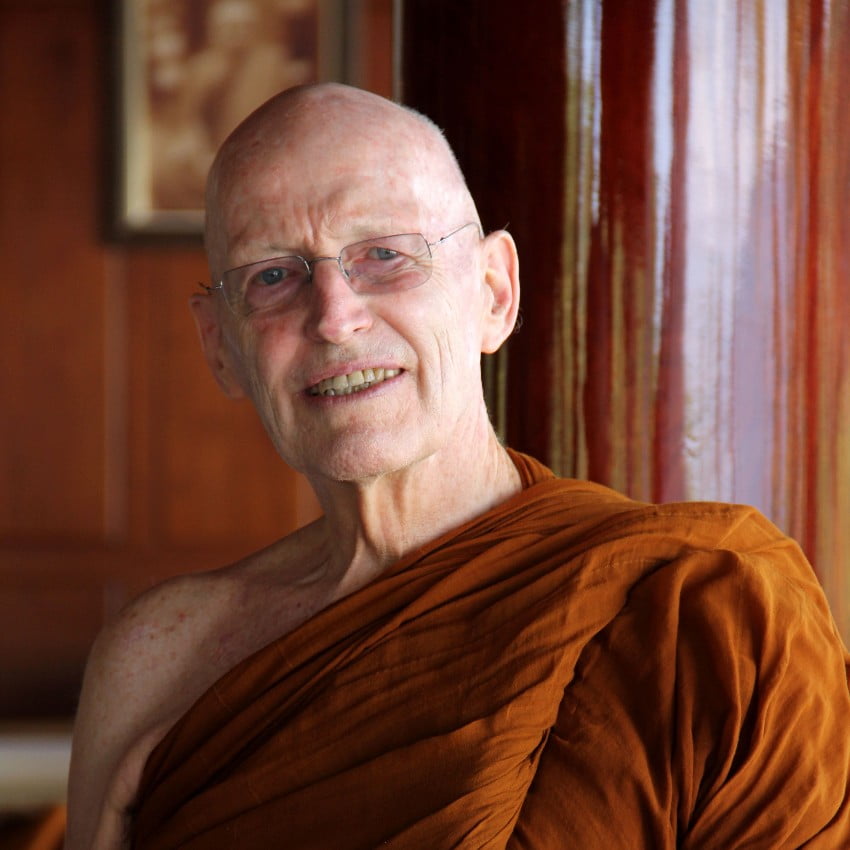
Luang Por Sumedho (Ajahn Sumedho) was born in Seattle, Washington in 1934. After serving four years in the US Navy as a medic, he completed a BA in Far Eastern Studies and... อ่านเพิ่มเติม

Luang Por Sumedho (Ajahn Sumedho) was born in Seattle, Washington in 1934. After serving four years in the US Navy as a medic, he completed a BA in Far Eastern Studies and a MA in South Asian Studies.

In 1966, he went to Thailand to practise meditation at Wat Mahathat in Bangkok. Not long afterwards he went forth as a novice monk in a remote part of the country, Nong Khai, and a year of solitary practice followed; he received full admission into the Sangha in 1967.

Although fruitful, the solitary practice showed him the need for a teacher who could more actively guide him. A fortuitous encounter with a visiting monk led him to Ubon province to practise with Venerable Ajahn Chah. He took dependence from Ajahn Chah and remained under his close guidance for ten years. In 1975, Luang Por Sumedho established Wat Pah Nanachat (International Forest Monastery) where Westerners could be trained in English. In 1977, he accompanied Ajahn Chah to England and took up residence at the Hampstead Vihara with three other monks.

Luang Por Sumedho has inducted more than a hundred aspirants of many nationalities into monastic life, and has established four monasteries in England, as well as branch monasteries overseas. In 1979, Luang Por Sumedho established Cittaviveka – Chithurst Buddhist Monastery, in West Sussex, where he served as abbot until 1984. This was the first forest monastery that he established in the West. Here in England he subsequently founded Aruna Ratanagiri Monastery in Harnham, Northumberland, Hartridge Buddhist Monastery in Honiton, Devon and Amaravati Buddhist Monastery in Great Gaddesden, Hertfordshire.

In late 2010, he retired as abbot of Amaravati Buddhist Monastery. From 2010 until early 2021, he lived in Thailand, before returning to live at Amaravati Buddhist Monastery. Luang Por Sumedho continues to share the Dhamma, wherever he resides.

Cover for Anthology Vol 5 – The Wheel of Truth
The title of this book refers to the image of the Buddha’s teaching, the Wheel of Truth (or Dhamma). It is a wheel that he set rolling in his first discourse by proclaiming the Four Noble Truths and the Eightfold Path of practice. This teaching remains as the axis of Ajahn Sumedho’s teaching and personal contemplative work. This particular collection of his Dhamma talks and... อ่านเพิ่มเติม

The title of this book refers to the image of the Buddha’s teaching, the Wheel of Truth (or Dhamma). It is a wheel that he set rolling in his first discourse by proclaiming the Four Noble Truths and the Eightfold Path of practice. This teaching remains as the axis of Ajahn Sumedho’s teaching and personal contemplative work. This particular collection of his Dhamma talks and dialogues is composed of material that has appeared in various newsletters and magazines before; it derives from different periods in Ajahn Sumedho’s teaching career, but it has been gathered into three parts to address overarching themes.

มีให้บริการใน Deutsch ด้วย
Cover for Mindfulness – The Path to the Deathless
The aim of this book is to provide instruction and reflection on Buddhist meditation as taught by Ajahn Sumedho, using material extracted from talks he gave in the early 1980s. These talks were almost all given to monastics who were familiar with the language and terms of Theravada Buddhism – but Ajahn Sumedho’s approach is not technically intricate, and so we felt that many more... อ่านเพิ่มเติม

The aim of this book is to provide instruction and reflection on Buddhist meditation as taught by Ajahn Sumedho, using material extracted from talks he gave in the early 1980s. These talks were almost all given to monastics who were familiar with the language and terms of Theravada Buddhism – but Ajahn Sumedho’s approach is not technically intricate, and so we felt that many more people could benefit from these instructions than the small gatherings in the monasteries. You are therefore invited to make use this book for your own spiritual practice.

มีให้บริการใน Pусский ด้วย
Cover for Le Quattro Nobili Verità
La ragione per la quale io e voi abbiamo dovuto percorrere faticosamente questo lungo cammino risiede nel fatto che non abbiamo scoperto, non abbiamo penetrato quattro verità. Quali sono? Esse sono: la Nobile Verità della Sofferenza, la Nobile Verità dell’Origine della Sofferenza, la Nobile Verità della Cessazione della Sofferenza, e la Nobile Verità del Sentiero che conduce alla Cessazione della Sofferenza. (Digha Nikaya, Sutta 16).... อ่านเพิ่มเติม

La ragione per la quale io e voi abbiamo dovuto percorrere faticosamente questo lungo cammino risiede nel fatto che non abbiamo scoperto, non abbiamo penetrato quattro verità. Quali sono? Esse sono: la Nobile Verità della Sofferenza, la Nobile Verità dell’Origine della Sofferenza, la Nobile Verità della Cessazione della Sofferenza, e la Nobile Verità del Sentiero che conduce alla Cessazione della Sofferenza. (Digha Nikaya, Sutta 16).

Il Dhammacakkappavattana Sutta, l’insegnamento del Buddha sulle Quattro Nobili Verità è stato, in tutti questi anni, il più importante punto di riferimento che ho avuto per la pratica. E’ l’insegnamento che seguiamo nel nostro monastero in Thailandia. La scuola buddhista Theravada considera questo Sutta come la quintessenza dell’insegna-mento del Buddha. Esso da solo contiene tutto ciò che è necessario sapere per comprendere il Dhamma ed arrivare all’Illuminazione.

Cover for Cittaviveka

Cittaviveka

Ajahn Sumedho (2011)
‘CITTAVIVEKA’, the title of this book, is a word in the Pali language meaning ‘the mind of non-attachment’. A major theme of the Buddha’s teaching – known as the Dhamma – is that suffering is caused by attachment, and that the aim and result of the correct application of the teachings is a mind of non-attachment.
มีให้บริการใน Magyar, Pусский ด้วย
Cover for Die Vier Edlen Wahrheiten
Bei der Eröffnung des Tempels in Amaravati 1999 berichtete Lord Young, der Verfasser des „Manifesto“ der englischen Labour Party, wie er zum ersten Mal einen Vortrag von Ajahn Sumedho gehört und dabei verwundert ein zunehmendes Wohlgefühl verspührt hatte. Er hätte noch nie so entspannt auf einem Sofa gesessen – war das die wohltuede Wirkung des Dhamma?
หนังสือเล่มนี้แปลจาก The Four Noble Truths (Illustrated Edition)
Cover for Četiri Plemenite Istine

Četiri Plemenite Istine

Ajahn Sumedho (2007)
To što smo i vi i ja morali da pređemo mukotrpno dug put možemo zahvaliti tome što nismo otkrili, nismo shvatili četiri istine. Koje četiri? To su: plemenita istina o patnji, plemenita istina o nastanku patnje, plemenita istina o prestanku patnje i plemenita istina o putu koji vodi do prestanka patnje. (Digha nikaya, 16) Dhamma­ćakka­ppavattana sutta, Budino učenje o četiri ple- menite istine, bila je... อ่านเพิ่มเติม

To što smo i vi i ja morali da pređemo mukotrpno dug put možemo zahvaliti tome što nismo otkrili, nismo shvatili četiri istine. Koje četiri? To su: plemenita istina o patnji, plemenita istina o nastanku patnje, plemenita istina o prestanku patnje i plemenita istina o putu koji vodi do prestanka patnje.

(Digha nikaya, 16)

Dhamma­ćakka­ppavattana sutta, Budino učenje o četiri ple- menite istine, bila je osnovna nit koju sam godinama koristio u svojoj praksi. To smo učenje koristili u našem manastiru u Tajlandu. Budistička teravada škola smatra ovu suttu esencijom Budinog učenja. Ova jedna jedina sutta sadrži sve što je neop- hodno za razumevanje Dhamme i za prosvetljenje.

Premda se Dhamma­ćakka­ppavattana sutta smatra prvim govorom koji je Buda održao posle probuđenja, ponekad volim da mislim da je on svoju prvu propoved održao onda kada je sreo asketu na svom putu u Varanasi. Posle prosvetljenja u Bod Gaji, Buda je pomislio: “Ovo je tako suptilno učenje. Verovatno da re- čima ne mogu izraziti ono što sam otkrio i zato neću podučavati. Jednostavno ću do kraja života sedeti pod bodi drvetom.”

Cover for Intuïtief Gewaarzijn

Intuïtief Gewaarzijn

Ajahn Sumedho (2005)
TWINTIG JAAR GELEDEN, in 1984, betrok de kersverse kloostergemeenschap van het Amaravati Buddhist Centre, een barakachtig onderkomen op een winderige heuveltop in Hertfordshire, Engeland. De naam van het nieuwe klooster (met de betekenis (“De Doodloze Wereld”) was gekozen als weerklank van de oude Boeddhistische stad in Andara Pradesh in Zuid-India, en als neutraliserende kracht tegen de in die tijd heersende wederzijdse vernietigingsdrang, de nucleaire wapenwedloop,... อ่านเพิ่มเติม

TWINTIG JAAR GELEDEN, in 1984, betrok de kersverse kloostergemeenschap van het Amaravati Buddhist Centre, een barakachtig onderkomen op een winderige heuveltop in Hertfordshire, Engeland. De naam van het nieuwe klooster (met de betekenis (“De Doodloze Wereld”) was gekozen als weerklank van de oude Boeddhistische stad in Andara Pradesh in Zuid-India, en als neutraliserende kracht tegen de in die tijd heersende wederzijdse vernietigingsdrang, de nucleaire wapenwedloop, destijds nog gloedvol ondersteund door Ronald Reagan, Maragaret Thatcher en de Sovjet-Unie.

De meditatieruimte die we in gebruik hadden was de voormalige sport- en vergaderzaal van de school. De ramen waren stuk, opgelapt met plastic en plakband, tochtig en soms ontbraken ze helemaal; er liepen kris-kras gekleurde lijnen over de houten vloer van de sportzaal; het grote gouden Boeddha beeld stond op het voormalige podium in een spotlicht en omringd door dunne blauwe gordijnen die we hadden opgehangen in een poging om het geheel wat op te fraaien en vanwege de suggestie van oneindige ruimte die er van uit ging.

Sinds 1981, toen de gemeenschap nog voornamelijk in het Cittaveka Klooster in Chithurst, West Sussex was gevestigd, was het onze gewoonte om de wintermaanden na Oud en Nieuwe vrij te maken voor een groepsretraite. In die tijd van het jaar is het weer er niet naar om te verbouwen, het bezoek neemt af en de dagen zijn kort en donker — zodoende is het een perfecte situatie om de aandacht naar binnen te richten en de tijd te nemen voor een grondige beoefening van formele meditatie.

Amaravati opende de deuren in 1984 om de snel groeiende gemeenschap (groepsfoto’s uit die tijd laten zien dat er 40 monniken/nonnen waren en meer dan 20 novicen) meer ruimte te geven, en om in staat te zijn retraites te organiseren voor geinteresseerden. Toen de verhuizing een feit was bleek dat er een mogelijkheid was ontstaan voor ruim opgezette winter-retraites en voor Ajahn Sumedho, om op zijn onnavolgbare, veelomvattende en inspirerende wijze leiding te geven aan de gemeenschap.

หนังสือเล่มนี้แปลจาก Intuitive Awareness
Cover for Consapevolezza: la via oltre la morte.
La maggior parte delle istruzioni possono essere eseguite indifferentemente nella posizione seduta, camminando o stando fermi in piedi. Tuttavia, la consapevolezza del respiro (ānāpānasati) di cui si parla nei primi capitoli viene generalmente praticata nella posizione seduta, in quanto si giova dell’associazione con uno stato fisico di immobilità e calma. A tale scopo l’importante è sedersi tenendo la colonna vertebrale eretta ma non tesa, con... อ่านเพิ่มเติม

La maggior parte delle istruzioni possono essere eseguite indifferentemente nella posizione seduta, camminando o stando fermi in piedi. Tuttavia, la consapevolezza del respiro (ānāpānasati) di cui si parla nei primi capitoli viene generalmente praticata nella posizione seduta, in quanto si giova dell’associazione con uno stato fisico di immobilità e calma. A tale scopo l’importante è sedersi tenendo la colonna vertebrale eretta ma non tesa, con il collo allineato alla colonna e la testa bilanciata in modo che non ciondoli in avanti. Molti trovano che la postura del loto (seduti a gambe incrociate su un cuscino o una stuoia con uno o due piedi sulla coscia opposta con la pianta rivolta in su) offre un equilibrio ideale fra stabilità e vigore – si intende dopo alcuni mesi di pratica. E’ bene allenarsi ad assumere questa posizione con gentilezza, un poco alla volta. Se risultasse troppo difficile, si può usare una sedia con lo schienale diritto. Dopo aver trovato una posizione equilibrata e stabile, rilassate le braccia e il volto, lasciando che le mani riposino in grembo una sull’altra. Chiudete gli occhi, rilassate la mente, e rivolgete l’attenzione all’oggetto di meditazione prescelto

Cover for The way it is

The way it is

Ajahn Sumedho (1984)
This book contains a collection of teachings of Ajahn Sumedho given to people who are familiar with the conventions of Theravada Buddhism and have some experience of meditation. Most of the chapters are edited from talks given during retreats for lay people for Ajahn Sumedho’s monastic (ordained) disciples, so they require some careful attention and are best read in sequence. In the monastic retreats Ajahn... อ่านเพิ่มเติม

This book contains a collection of teachings of Ajahn Sumedho given to people who are familiar with the conventions of Theravada Buddhism and have some experience of meditation. Most of the chapters are edited from talks given during retreats for lay people for Ajahn Sumedho’s monastic (ordained) disciples, so they require some careful attention and are best read in sequence.

In the monastic retreats Ajahn Sumedho develops a theme from the Buddha’s teaching over a couple of months, linking it to other aspects of the Dhamma, embellishing it with accounts of his personal experiences, demonstrating its relevance to the society in general, or using it as an exhortation to the Sangha to live up to their aspiration of enlightenment. Although it is not possible to render the tonal depth and variety of these talks in a printed work, the mixture of short exhortations and pointers, longer contemplative reflections mingled with the chants that the monks and nuns will be reciting daily (and have been doing so for years) may suggest the atmosphere and scope within which the teachings are offered.

มีให้บริการใน Français, Pусский ด้วย
สิ้นสุดผลลัพธ์