1 filtre

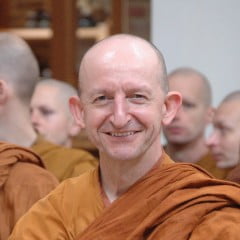
Ajahn Amaro

Netejar

Ajahn Amaro

Born in England in 1956, Ajahn Amaro received his BSc. in Psychology and Physiology from the University of London. Spiritual searching led him to Thailand, where he went to Wat Pah Nanachat,... Llegir més

Born in England in 1956, Ajahn Amaro received his BSc. in Psychology and Physiology from the University of London. Spiritual searching led him to Thailand, where he went to Wat Pah Nanachat, a Forest Tradition monastery established for Western disciples of Thai meditation master Ajahn Chah, who ordained him as a bhikkhu in April 1979. He returned to England in October 1979 and joined Ajahn Sumedho at the newly established Chithurst Monastery in West Sussex.

In 1983 he made an 830-mile trek from Chithurst to a new branch monastery, Harnham Vihāra, near the Scottish border. In July 1985, he moved to Amaravati Buddhist Monastery north of London and resided there for many years. In the early 1990s, he started making trips to California every year, eventually establishing Abhayagiri Monastery near Ukiah, Northern California, in June of 1996.

He lived at Abhayagiri until the summer of 2010, holding the position of co-abbot along with Ajahn Pasanno. At that time, he then moved back to Amaravati Buddhist Monastery in England to take up the position of abbot of this large monastic community.

Cover for Not Sure!
Cover for Not Sure!

Not Sure!

Ajahn Amaro (2019)
The Dhamma talk was given on the 20th of June 2018 at the World Fellowship of Buddhists The topic for this evening is ‘Not Sure!’ Sitting on Sukhumvit Road and not moving in a vehicle, with the evening scheduled to begin at 6:30 and realizing it had already passed that time, I thought: ‘That’s a very good introduction for this evening – Not Sure! –... Llegir més

The Dhamma talk was given on the 20th of June 2018 at the World Fellowship of Buddhists

The topic for this evening is ‘Not Sure!’ Sitting on Sukhumvit Road and not moving in a vehicle, with the evening scheduled to begin at 6:30 and realizing it had already passed that time, I thought: ‘That’s a very good introduction for this evening – Not Sure! – When’s Ajahn Amaro going to arrive? Is he going to arrive? What will happen? It’s uncertain (My Naer). We don’t know. It’s not a sure thing.’ So that was an unplanned but useful preparation for this evening because this is the principle we are investigating here. It’s a part of all of our lives. So, I will offer a few reflections this evening on this theme and hopefully some of the things that I say would be useful for you.

When we meet with a feeling of uncertainty usually what we do is we feel worried, we feel threatened. We don’t know what’s going to happen in the future so what we tend to do is to try to fill up that unknown with a plan or a hope or a belief. We fill it with ideas of what might happen.

We often distract ourselves: ‘I don’t want to think about the future. I don’t want to worry about that. So, I’ll just look at my phone and catch up on my Facebook friends or see what communication I have coming through Line, what’s on the news or something.’ We thus deal with that feeling of worry or uncertainty with choosing distraction or, alternatively, we just switch off – we go blank, go numb and shut the world down, disengage all together. We do this because the feeling of not being sure is something that most of us don’t like and we relate to it as a problem, that feeling of anxiety, uncertainty. We automatically think of it as a problem, something that’s unwelcome.

També disponible en ไทย
Cover for Emptiness and Pure Awareness
From a talk given on the winter retreat, Chithurst, February 1991 Gotama Buddha said, when he was an old man, “This body is like an old cart, held together by straps; this body only keeps going by makeshift repairs. The only way I can feel comfortable is to absorb my mind into signless concentration.” For all of us, the Buddha included, we are faced with... Llegir més

From a talk given on the winter retreat, Chithurst, February 1991

Gotama Buddha said, when he was an old man, “This body is like an old cart, held together by straps; this body only keeps going by makeshift repairs. The only way I can feel comfortable is to absorb my mind into signless concentration.”

For all of us, the Buddha included, we are faced with the inevitable presence of dissatisfaction and physical discomfort. Ever present is the danger of pain and disease, because we are born. Because there is a physical birth, there must be physical decay, the two have to go together, they are one thing. Thus our only true refuge is the Deathless, that which is not subject to disease, not subject to defilement, not subject to time or to limitation, that which is unsupported. In this way, returning to our source, the Deathless, is our only way to cure disease, the only way to pass beyond it.

This returning to the Source, or realizing the Deathless, is the sense of coming to know the source of our life, the origin of our life. Because it is the very fabric of our life, the basis of our existence, it is something that has been exerting a power of attraction on us all through our life, the attraction of Truth, of the Real, the completely satisfying, the completely safe.

També disponible en ไทย
Cover for Mara and the Mangala I
This story is intended to be both a partner to the novel The Pilgrim Kamanita, written by Karl Gjellerup in 1906, and a tale that stands on its own. There is no need to have read the earlier book in order to make sense of this one; however, should you wish to go to the source from which many of the characters and scenes of... Llegir més

This story is intended to be both a partner to the novel The Pilgrim Kamanita, written by Karl Gjellerup in 1906, and a tale that stands on its own. There is no need to have read the earlier book in order to make sense of this one; however, should you wish to go to the source from which many of the characters and scenes of this tale have sprung, an English version of it is to be found here.

Cover for บุญ
Cover for บุญ

บุญ

Ajahn Amaro (2018)
…เมื่อจิตใจของคนได้เกิดเป็น “บุญ” แล้ว บุญนี้สามารถจุดความสว่างไสวและความสุขขึ้นในใจ ซึ่งจะเป็นพื้นฐานที่มั่นคงของความดีงามด้านอื่นๆ ให้เกิดขึ้น…
Aquest llibre és una traducció de A Generous Heart
Cover for A Generous Heart
Today is the 100th day after the passing away of the king of Thailand: His Majesty King Bhumibol Adulyadej. Also, at this time, a good friend of the sangha, Yom Ploen Petchkua, is very close to the end of her life. She was diagnosed with five brain tumours a few months ago and I had the chance to go down and see her with Ajahn... Llegir més

Today is the 100th day after the passing away of the king of Thailand: His Majesty King Bhumibol Adulyadej. Also, at this time, a good friend of the sangha, Yom Ploen Petchkua, is very close to the end of her life. She was diagnosed with five brain tumours a few months ago and I had the chance to go down and see her with Ajahn Pasanno, and a number of monastic and lay friends in December, in her hometown in Songkla, southern Thailand.

Reflecting on these people – the king of Thailand and Yom Ploen – it is said in our Buddhist way of regarding things that these are people who have created a lot of merit, a lot of puñña in their lives. The king of Thailand dedicated himself, for the 70 years that he was on the throne, through living in a skilful way and endeavouring to establish wholesome principles of conduct in the hearts of the Thai people, to help them in genuine, practical and efficient ways: developing water systems, gardening systems, systems of communication and so forth. Yom Ploen has been very involved in supporting our monasteries and helping to publish many Dhamma books. In the last few days I have been conscious of giving away books that she was directly involved in producing books about the funeral of Luang Por Chah and the foundation of Amaravati. Over the years she has been responsible for bringing into being dozens of different Dhamma books.

També disponible en ไทย
Cover for ตามใจมาเติมสุข
คู่มือฝึกสมาธิภาวนาเบื้องต้น เป็นการแนะนำขั้นตอนและวิธีในการปฏิบัติภาวนา มีคำอธิบายซึ่งเป็นหลักการสำคัญเกี่ยวกับการปฏิบัติสมาธิภาวนาขั้นพื้นฐาน ที่ผู้เริ่มสนใจผึกสมาธิภาวนาควรทราบในเบื้องต้น เพื่อจะได้รู้วิธีวางรากฐานที่ถูกต้อง และมั่นคงให้กับการปฏิบ้ติสมาธิภาวนาของตน
Aquest llibre és una traducció de Finding The Missing Peace
Cover for รำลึกซึ้ง
รำลึกซึ้ง…ความรักและแรงบันดาลใจของแม่ …ในระยะหลังๆ นี้ อาตมามักจะนึกถึงอิทธิพลที่โยมแม่มีต่อชีวิตของอาตมา แล้วก็เกิดความคิดขึ้นว่า ตั้งแต่วัยเด็กจนกระทั่งมาพบธรรมะเมื่ออายุ ๒๑ ปี โยมแม่เป็นคนสำคัญที่สุดที่ทำให้อาตมาได้รู้จักว่า อะไรเป็นสิ่งที่ประเสริฐ ดีงาม และมีคุณค่าในโลกใบนี้
Aquest llibre és una traducció de Who Will Feed the Mice?
Cover for La Isla: Una antología de las enseñanzas del Buda sobre Nibbāna
Introducción de Ajahn Sumedho (fragmento) Una dificultad con la palabra Nibbāna es que su significado está más allá del poder de las palabras para describirlo. Es, esencialmente, indefinible. Otra dificultad es que muchos budistas ven Nibbāna como algo inalcanzable –tan elevado y remoto que no seríamos lo suficientemente merecedores siquiera de intentarlo–. O vemos Nibbāna como una meta, como algo desconocido, indefinido, que deberíamos de... Llegir més

Introducción de Ajahn Sumedho (fragmento)

Una dificultad con la palabra Nibbāna es que su significado está más allá del poder de las palabras para describirlo. Es, esencialmente, indefinible.

Otra dificultad es que muchos budistas ven Nibbāna como algo inalcanzable –tan elevado y remoto que no seríamos lo suficientemente merecedores siquiera de intentarlo–. O vemos Nibbāna como una meta, como algo desconocido, indefinido, que deberíamos de algún modo tratar de alcanzar.

Aquest llibre és una traducció de The Island
Cover for Den fehlenden Frieden finden
Dieses kleine Buch, das in einer Reihe von Lektionen Meditationshilfen und -techniken für Anfänger beschreibt, basiert auf einer sechswöchigen Serie von Lektionen, die 2002 in Mendocino in Kalifornien gegeben wurden. Diese Lektionen beschreiben buddhistische Meditationstechniken. Die Ideen und Prinzipien für die Meditationspraxis, die in ihnen erklärt werden, stammen eindeutig aus der buddhistischen Welt. Doch bedeutet das nicht, dass diese Meditationsanleitungen ausschließlich für Buddhisten hilfreich oder... Llegir més

Dieses kleine Buch, das in einer Reihe von Lektionen Meditationshilfen und -techniken für Anfänger beschreibt, basiert auf einer sechswöchigen Serie von Lektionen, die 2002 in Mendocino in Kalifornien gegeben wurden.

Diese Lektionen beschreiben buddhistische Meditationstechniken. Die Ideen und Prinzipien für die Meditationspraxis, die in ihnen erklärt werden, stammen eindeutig aus der buddhistischen Welt. Doch bedeutet das nicht, dass diese Meditationsanleitungen ausschließlich für Buddhisten hilfreich oder angemessen wären. Die Lektionen stellen einfache Mittel und Techniken zur Verfügung, die man benutzen kann, um das Leben friedlicher zu machen, um zu helfen, sich selbst und andere ein bisschen besser zu verstehen und in etwas mehr Harmonie mit der Welt zu leben.

Die Absicht für dieses Buch und jede dieser Lektionen ist, Methoden, Techniken und Prinzipien zur Verfügung zu stellen, die jedermann und jede Frau im Bereich seines oder ihres eigenen Lebens anwenden kann — unabhängig davon, ob man Humanist, Christ, Kommunist, Buddhist oder Anhänger irgend eines anderen Glaubenssystems ist.

Aquest llibre és una traducció de Finding The Missing Peace
Cover for L’Ascolto Interiore – Meditazione sul Suono del Silenzio
Ci sono alcuni argomenti che i praticanti della meditazione buddhista conoscono bene: “la consapevolezza del respiro”, in cui ci si focalizza sul ritmo del respiro, “la meditazione camminata”, che ruota intorno alla sensazione dei passi mentre si cammina su e giù lungo un percorso prefissato, la ripetizione interna di un mantra, come “Bud-dho”. Tutte queste pratiche sono concepite per ancorare l’attenzione nella presenza di questo... Llegir més

Ci sono alcuni argomenti che i praticanti della meditazione buddhista conoscono bene: “la consapevolezza del respiro”, in cui ci si focalizza sul ritmo del respiro, “la meditazione camminata”, che ruota intorno alla sensazione dei passi mentre si cammina su e giù lungo un percorso prefissato, la ripetizione interna di un mantra, come “Bud-dho”. Tutte queste pratiche sono concepite per ancorare l’attenzione nella presenza di questo esatto momento, di questa realtà presente.

Insieme a questi metodi più conosciuti ce ne sono molti altri che possono essere utilizzati allo stesso scopo. Uno di questi è noto come “ascolto interiore” o “meditazione sul suono interiore”, o ancora, in sanscrito, “nada yoga”. Questi termini si riferiscono tutti al metodo in cui si presta attenzione a quello che è stato chiamato “il suono del silenzio”, o “il suono-nada”. “Nada” è la parola sanscrita per “suono”, come pure la parola spagnola per “nulla”. Una coincidenza interessante e – del tutto casualmente – significativa.

Aquest llibre és una traducció de Inner Listening
Cover for The Hush At The End Of The World
In May of 2003, three senior Buddhist monks from the Thai forest tradition of Ajahn Chah – Ajahn Sumedho, Ajahn Amaro and Ajahn Nyanarato – travelled into the Arctic wilderness, 800 miles from the North Pole. This is a photo-journal of their odyssey.
Cover for Roots and Currents
This book contains a miscellany of my writings, rather than transcribed talks, from throughout my life as an ajahn in the Western Thai Forest sangha. The first part, ‘Roots’, is mainly historical; its chapters introduce Ajahn Chah, our founder and inspiration, and Ajahn Sumedho who led us to the UK and beyond, and then describes various events in our Western history.
També disponible en Português
Cover for ¿Quién Alimentará Los Ratones?
Este pequeño libro contiene reflexiones de Ajahn Amaro mencionadas en una charla que dio en el Monasterio Abhayagiri en el año 2003, poco antes de viajar para acompañar a su madre en sus últimos días. _“Los primeros maestros” es una expresión referida a la madre y el padre. “Las primeras deidades” es una expresión referida a la madre y el padre. “Aquellos que merecen devoción”... Llegir més

Este pequeño libro contiene reflexiones de Ajahn Amaro mencionadas en una charla que dio en el Monasterio Abhayagiri en el año 2003, poco antes de viajar para acompañar a su madre en sus últimos días.

“Los primeros maestros” es una expresión referida a la madre y el padre. “Las primeras deidades” es una expresión referida a la madre y el padre. “Aquellos que merecen devoción” es una expresión referida a la madre y el padre. ¿Y por qué? Los padres son una gran ayuda para sus hijos; los educan, los alimentan y les muestran el mundo. Anguttara Nikaya 4.63

… «Cuando me pregunto de dónde me llegaron esas influencias inspiradas o las inclinaciones hacia aquello que es bueno, saludable y útil, me doy cuenta de que vinieron casi por completo de ella. Cuando falleció mi abuelo materno, mi madre me dijo que ella había recibido de él lo principal de su guía y dirección. Ella respetaba esa herencia de amabilidad, discreción y benevolencia hacia todas las cosas, y transmitió a su vez esas cualidades. Esa fue realmente la principal influencia espiritual que tuve antes de ir a Tailandia: todo lo que me mantuvo operando de alguna manera en la proximidad del comportamiento humano equilibrado, fue gracias a ella. De modo que desarrollé un gran sentimiento de alegría y gratitud hacia ella por haber tenido la fortuna de recibir esto».

Aquest llibre és una traducció de Who Will Feed the Mice?
Load more